%22%20d%3D%22M459%20412A256%20256%200%200%200%20456%2096L256%20256z%22%2F%3E%3Cpath%20fill%3D%22%23fff%22%20d%3D%22M123.2%2037.1a256%20256%200%201%200%20310.2%2034.3l-85%2088.5a133.4%20133.4%200%201%201-161.6-18z%22%2F%3E%3Cpath%20fill%3D%22url(%23b)%22%20d%3D%22M458.7%2099.6a256%20256%200%201%200%20.5%20312.1l-97.3-74.6a133.3%20133.3%200%201%201-.3-162.6z%22%2F%3E%3Cdefs%3E%3CradialGradient%20id%3D%22b%22%20cx%3D%220%22%20cy%3D%220%22%20r%3D%221%22%20gradientTransform%3D%22rotate(113%20286%20327.3)scale(724)%22%20gradientUnits%3D%22userSpaceOnUse%22%3E%3Cstop%20stop-color%3D%22%2338c3ee%22%2F%3E%3Cstop%20offset%3D%22.5%22%20stop-color%3D%22%2369f1f6%22%2F%3E%3Cstop%20offset%3D%22.9%22%20stop-color%3D%22%23207d8b%22%2F%3E%3C%2FradialGradient%3E%3ClinearGradient%20id%3D%22a%22%20x1%3D%22513%22%20x2%3D%22-1%22%20y1%3D%22256.5%22%20y2%3D%22255.5%22%20gradientUnits%3D%22userSpaceOnUse%22%3E%3Cstop%20offset%3D%22.2%22%20stop-color%3D%22%23217684%22%2F%3E%3Cstop%20offset%3D%22.5%22%20stop-color%3D%22%2356d3db%22%2F%3E%3C%2FlinearGradient%3E%3C%2Fdefs%3E%3C%2Fsvg%3E)
%22%20d%3D%22M205.7%20294.7c-22.4%2022.4-84.9-3.7-139.4-58.3C11.7%20182-14.4%20119.4%208%2097c7.4-7.4%2019.2-9.5%2033.6-7%205%2029.2%2028.7%2069.3%2065.3%20105.8%2036.5%2036.6%2076.6%2060.4%20105.9%2065.3%202.4%2014.4.3%2026.2-7.1%2033.6%22%2F%3E%3Cpath%20fill%3D%22url(%23b)%22%20d%3D%22M212.8%20261.1c-29.3-5-69.4-28.7-106-65.3S46.6%20119.2%2041.7%2090c-2.5-14.3-.4-26%207-33.5s19.2-9.5%2033.6-7c5%2029.2%2028.7%2069.3%2065.3%20105.8%2036.5%2036.6%2060.3%2076.7%2065.3%20106%22%2F%3E%3Cpath%20fill%3D%22url(%23c)%22%20d%3D%22M246.3%20254c-7.4%207.5-19.2%209.6-33.5%207.1-5-29.2-28.8-69.3-65.3-105.9C110.9%20118.6%2087%2078.6%2082.2%2049.3c29.2%205%2069.3%2028.7%20105.9%2065.3s60.3%2076.7%2065.3%20105.9c2.4%2014.4.3%2026.2-7.1%2033.6%22%2F%3E%3Cpath%20fill%3D%22url(%23d)%22%20d%3D%22M286.9%20213.5c-7.4%207.4-19.2%209.5-33.5%207-5-29.2-28.8-69.3-65.3-105.9C151.5%2078%20111.4%2054.3%2082%2049.3c-2.4-14.3-.3-26%207.1-33.5%2022.5-22.4%2084.9%203.7%20139.5%2058.2%2054.6%2054.6%2080.6%20117%2058.2%20139.5%22%2F%3E%3Cpath%20fill%3D%22%23d8f1f3%22%20d%3D%22M228.7%2074q-7.8-6.5-15.8-12.6-8.2-6-16.3-11.7-16.5-11.3-34.3-20A146%20146%200%200%200%20126%2016.8a58%2058%200%200%200-17.6-.8q-3.8.5-7.4%202-3.1%201.5-5.5%203.9c-5.9%206-5.9%2018.3-3%2029.7a126%20126%200%200%200%2015.6%2033.7%20371%20371%200%200%200%2022.6%2032Q143%20132.7%20156%20148a499%20499%200%200%201%2048.7%2066.4q5.4%209.3%209.7%2019a110%20110%200%200%201%208%2026.6%2081%2081%200%200%201%20.4%2017.6q-.7%206.4-3.3%2012.3-2.9%206.4-7.8%2011.1t-11.4%207q-6%202.1-12.2%202.5-11.4.4-22.4-2.7c-14-3.8-26.5-10.2-38.3-17.5a238%20238%200%200%201-32.7-24.7q-7.6-6.9-14.8-14.1-7.1-7.4-13.6-15Q73.9%20243%2082%20249q8%206%2016.3%2011.7%2016.5%2011.3%2034.2%2020.1a181%20181%200%200%200%2018%207.7q9%203.4%2018.3%205.1a58%2058%200%200%200%2017.7.9q3.8-.5%207.4-2%203-1.5%205.4-4c6-6%206-18.3%203-29.5-3-11.3-9-22.8-15.8-33.7Q176%20209%20164%20193.4a872%20872%200%200%200-25.1-31A499%20499%200%200%201%2090%2096.3q-5.6-9.3-9.8-19.2A109%20109%200%200%201%2072%2044.7q-.4-6%20.3-11.8.8-6.4%203.3-12.3%202.8-6.4%207.8-11%205-4.8%2011.4-7Q100.7.3%20107%200q11.3-.6%2022.3%202.6c14%203.9%2026.6%2010.3%2038.3%2017.5A239%20239%200%200%201%20200.4%2045q7.5%206.8%2014.8%2014a305%20305%200%200%201%2013.5%2015%22%2F%3E%3Cdefs%3E%3ClinearGradient%20id%3D%22a%22%20x1%3D%22-2.1%22%20x2%3D%22195.6%22%20y1%3D%22107.2%22%20y2%3D%22304.8%22%20gradientUnits%3D%22userSpaceOnUse%22%3E%3Cstop%20stop-color%3D%22%232acbd2%22%2F%3E%3Cstop%20offset%3D%221%22%20stop-color%3D%22%23262d41%22%2F%3E%3C%2FlinearGradient%3E%3ClinearGradient%20id%3D%22b%22%20x1%3D%22-20.5%22%20x2%3D%22331.4%22%20y1%3D%2220.8%22%20y2%3D%22333.5%22%20gradientUnits%3D%22userSpaceOnUse%22%3E%3Cstop%20offset%3D%220%22%20stop-color%3D%22%2360eff1%22%2F%3E%3Cstop%20offset%3D%22.2%22%20stop-color%3D%22%2358d5d9%22%2F%3E%3Cstop%20offset%3D%22.5%22%20stop-color%3D%22%2345939d%22%2F%3E%3Cstop%20offset%3D%22.9%22%20stop-color%3D%22%232b4758%22%2F%3E%3C%2FlinearGradient%3E%3ClinearGradient%20id%3D%22c%22%20x1%3D%22-17.5%22%20x2%3D%22334.3%22%20y1%3D%22-48.6%22%20y2%3D%22332.8%22%20gradientUnits%3D%22userSpaceOnUse%22%3E%3Cstop%20stop-color%3D%22%2300abb3%22%2F%3E%3Cstop%20offset%3D%221%22%20stop-color%3D%22%23d2f2f4%22%2F%3E%3C%2FlinearGradient%3E%3ClinearGradient%20id%3D%22d%22%20x1%3D%22-25.5%22%20x2%3D%22338.3%22%20y1%3D%22-110.3%22%20y2%3D%22241.3%22%20gradientUnits%3D%22userSpaceOnUse%22%3E%3Cstop%20offset%3D%22.3%22%20stop-color%3D%22%2300b4bb%22%2F%3E%3Cstop%20offset%3D%22.5%22%20stop-color%3D%22%2300b9bf%22%2F%3E%3Cstop%20offset%3D%22.7%22%20stop-color%3D%22%231cc6cc%22%2F%3E%3Cstop%20offset%3D%22.9%22%20stop-color%3D%22%2346dce0%22%2F%3E%3Cstop%20offset%3D%221%22%20stop-color%3D%22%2360eff1%22%2F%3E%3C%2FlinearGradient%3E%3C%2Fdefs%3E%3C%2Fsvg%3E)
%22%2F%3E%0A%20%20%3Cpath%20d%3D%22M0%20133.5L103%20188.5L150.5%20162.5V106.5L206%20138.5V178.5L103%20238L0%20178.5V133.5Z%22%20fill%3D%22url(%23markGradient)%22%2F%3E%0A%20%20%3Cdefs%3E%0A%20%20%20%20%3ClinearGradient%20id%3D%22markGradient%22%20x1%3D%220%22%20y1%3D%22238%22%20x2%3D%22206%22%20y2%3D%220%22%20gradientUnits%3D%22userSpaceOnUse%22%3E%0A%20%20%20%20%20%20%3Cstop%20offset%3D%220%22%20stop-color%3D%22%231B7789%22%2F%3E%0A%20%20%20%20%20%20%3Cstop%20offset%3D%220.48%22%20stop-color%3D%22%2342D5DC%22%2F%3E%0A%20%20%20%20%20%20%3Cstop%20offset%3D%221%22%20stop-color%3D%22%2368F0F5%22%2F%3E%0A%20%20%20%20%3C%2FlinearGradient%3E%0A%20%20%3C%2Fdefs%3E%0A%3C%2Fsvg%3E%0A)
Why We Don't Use Homomorphic Encryption (And Why You Shouldn't Require It)
Homomorphic encryption is elegant in theory but 1,000–10,000x slower in practice and lacks FIPS certification — making it unsuitable for production AI workloads today.

The promise of computing on encrypted data is seductive. The reality? Homomorphic encryption isn’t ready for enterprise AI workloads—and may not be for years.
When evaluating privacy-preserving AI technologies, sophisticated buyers often ask about fully homomorphic encryption (FHE). It’s a fair question. HE offers an elegant theoretical solution: compute on encrypted data without ever decrypting it. Run your AI models, perform your searches, generate your insights—all while data remains encrypted end-to-end.
In theory, this is the holy grail. In practice, it’s a mirage.
The Performance Problem Is Fundamental
Homomorphic encryption schemes like CKKS (which supports the approximate arithmetic needed for AI operations) run 1,000x to 10,000x slower than equivalent plaintext operations. For vector search, this transforms a sub-second query into a 10–30 second wait.
This isn’t an implementation problem that better engineering will solve. The overhead is baked into the mathematics:
- Noise budgets accumulate with each operation, requiring periodic “bootstrapping” (re-encryption) that dominates compute time
- Ciphertext expansion of 32–64x increases memory bandwidth requirements proportionally
- Complex computations hit fundamental walls that no algorithm can circumvent
For enterprise AI workloads with millions of embeddings and real-time latency requirements, these constraints aren’t acceptable. Users expect sub-second responses from AI assistants and search tools. A 10-second delay per query renders the system unusable.
The Compliance Gap Is a Legal Blocker
Performance is a practical blocker. Compliance is a legal one.
There is no FIPS 140-2 or FIPS 140-3 certified implementation of homomorphic encryption.
For organizations in healthcare, financial services, government contracting, or critical infrastructure, FIPS certification isn’t optional—it’s required by regulation or contract. Using non-NIST-standardized cryptography creates immediate compliance gaps that security and legal teams won’t approve.
This matters beyond regulatory checkboxes. NIST standardization reflects 20+ years of cryptanalysis by the global security research community:
- Side-channel resistance has been formally analyzed
- Attack vectors are understood and documented
- Battle-tested implementations exist in validated libraries
When you deploy experimental schemes like CKKS, you’re betting your data security on mathematics that hasn’t received equivalent scrutiny.
What Enterprise Security Teams Actually Need
We’ve spoken with hundreds of CISOs and security architects. Their requirements are consistent:
- Algorithms with extensive cryptanalysis history — not novel mathematics
- Implementations with formal side-channel resistance — not theoretical proofs
- Compliance certification for audit trails — not roadmap promises
Homomorphic encryption satisfies none of these requirements today.
What does satisfy these requirements? The same cryptographic primitives your organization already uses: AES-256-GCM for symmetric encryption, SHA-3 for hashing, HMAC for key derivation. These algorithms are implemented in FIPS 140-3 validated libraries like libcrypto. Your security team doesn’t need to conduct novel cryptographic review—they can verify compliance against published standards.
The Alternative: Cryptographic Indexing
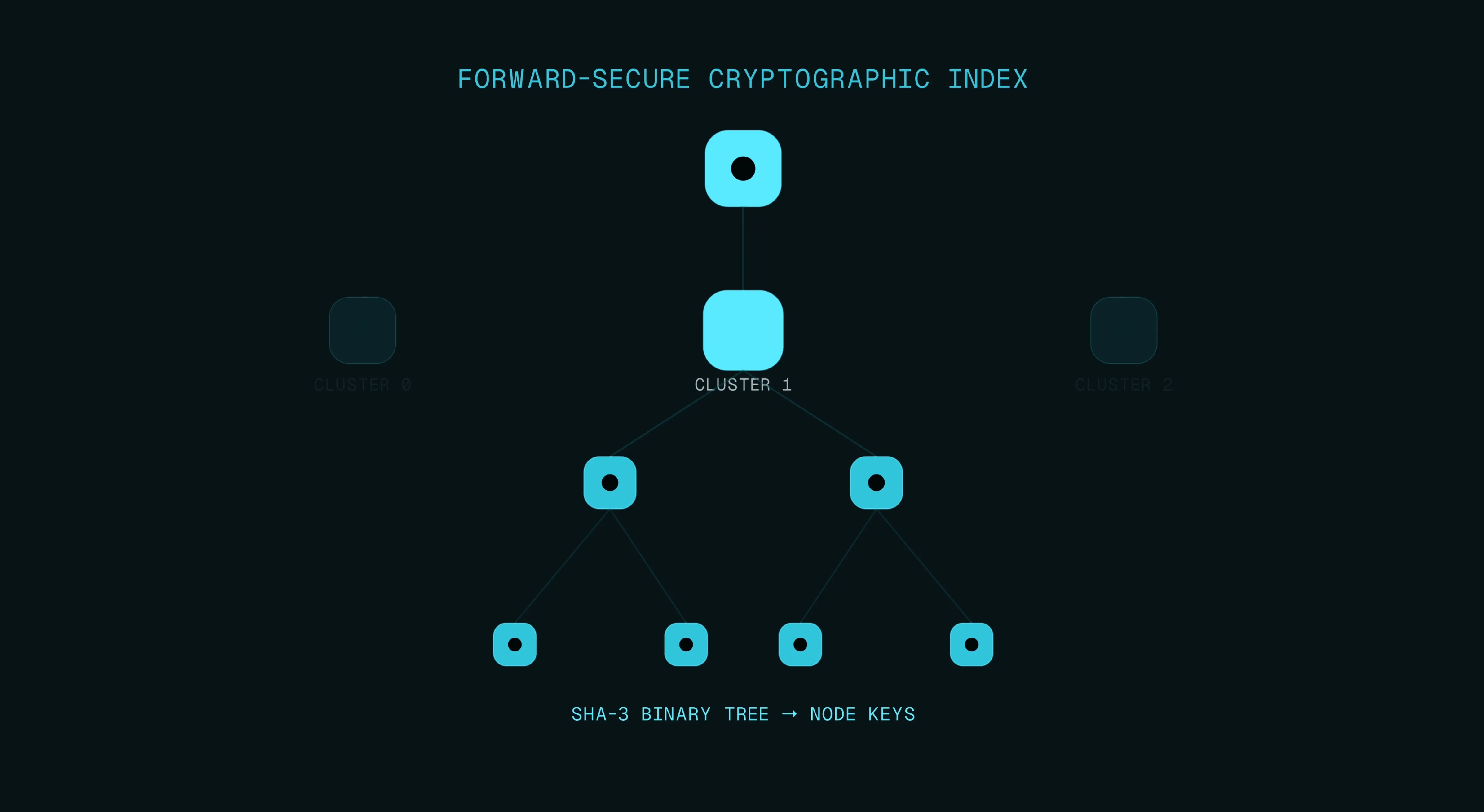
Rather than computing on encrypted data (the HE approach), CyborgDB searches an encrypted index that points to encrypted vectors—then decrypts only the results that matter.
Here’s how it works:
- Embeddings are organized into semantically similar clusters, each secured with keys derived from a master key
- At query time, the system identifies relevant clusters and reconstructs only those index structures cryptographically
- Decryption happens in memory, just before delivery to your application—the database server never sees plaintext embeddings or complete index structures
The result:
| Metric | CyborgDB | Homomorphic Encryption |
|---|---|---|
| Query latency | <10ms | 10,000–30,000ms |
| Performance overhead | <15% vs plaintext | 1,000–10,000x slower |
| FIPS 140-3 compliance | ✓AES-256-GCM, SHA-3 | ✗Not certified |
| Production-ready | Yes | Experimental |
Questions to Ask AI Security Vendors
When evaluating solutions, be wary of those who promise HE-based systems that “solve” the performance problem. Ask:
“Can you share benchmark data?”
- Expect sub-second latency at million-vector scale. If they can’t demonstrate this, the solution isn’t production-ready.
“What’s your FIPS certification status?”
- For regulated industries, this is non-negotiable. No certification means no deployment.
“How do you address the fundamental computational overhead inherent to HE mathematics?”
- If the answer is “we’ve optimized it,” they haven’t. The overhead is mathematical, not implementational.
The Bottom Line
The question isn’t whether HE is elegant (it is) or promising (it is). The question is whether it solves your problem today.
Homomorphic encryption will likely become practical for enterprise workloads eventually. Hardware acceleration, algorithmic improvements, and NIST standardization efforts are all progressing. In 5–10 years, HE may be a viable option.
But enterprises deploying AI today can’t wait for theoretical future solutions. The data centralization risk exists now. The compliance requirements exist now. The competitive pressure to deploy AI exists now.
Your data security is too important for solutions that only work in theory.
CyborgDB delivers encrypted vector search using NIST-standardized cryptography—sub-10ms latency, <15% overhead, full FIPS compliance. [See how it works →]
 CYBORG
Inside CyborgDB: How End-to-End Encrypted Vector Search Works
Most vector databases encrypt at rest and in transit, then decrypt to plaintext during search — exactly when the data is most exposed. CyborgDB assumes the server may be compromised. This deep-dive walks through how it maintains end-to-end encryption across the entire vector lifecycle, including during search.
 CYBORG
Embeddings Aren't One-Way: A Real Vector Database Inversion Attack
A common assumption is that embeddings are safe, abstract, and one-way. They're not. Jim Armbruster runs a live attack on a production-style RAG pipeline — reconstructing social security numbers, passwords, and medical diagnoses from embeddings stored in plaintext with near-exact accuracy.
 CYBORG
How CyborgDB Secures the AI Knowledge Layer
Modern AI runs on retrieval, so organizations centralize their most sensitive data into vector databases — making them the AI knowledge layer and a whole new class of risk. Kevin Kopczynski walks through how CyborgDB solves this architecturally, encrypting embeddings into cryptographic tokens that stay searchable while your data stays fully encrypted.